Hearing aid maintenance costs: separate routine supplies from repairs
List consumables, cleaning support, paid visits, and repair uncertainties without inventing a standard maintenance schedule or annual price.
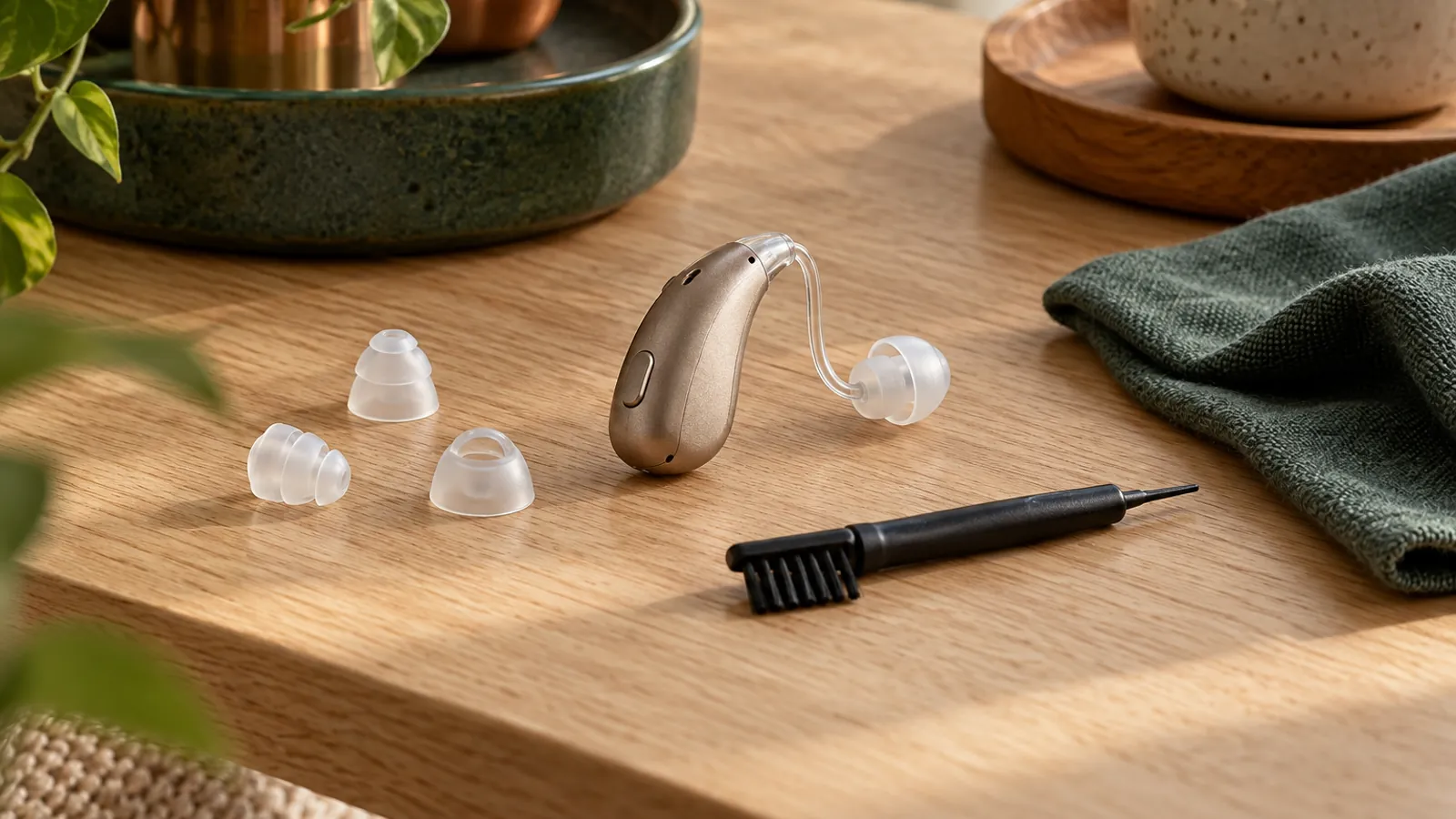
Budget hearing aid maintenance by listing the routine supplies and services your exact device needs, then keeping repair uncertainty separate. Follow the manufacturer's instructions and ask which tasks you can safely do yourself. Do not assume every device uses the same parts, every service visit is included, or every repair happens on a predictable schedule. This guide provides a worksheet method, not a national annual maintenance price.
Build a product-specific supply list
Ask the seller to identify the compatible consumables and the instructions for replacing or cleaning them. Depending on the device, the list may include items such as domes, filters, tubing, or power supplies. Do not buy a generic part merely because it looks similar. Ask about the exact model and size and whether a professional should perform the work.
Record how supplies are sold: individually, in packs, or as part of a service arrangement. Ask whether an initial supply is included and when you will start paying separately. A free starter pack should not be treated as a permanent zero cost. Equally, do not budget separate purchases for a period in which the agreement already includes the same items.
Distinguish routine care from a repair
Routine tasks follow the product's instructions and may be manageable at home. A damaged device, persistent malfunction, or uncertain component problem requires the support process for that product. Do not open, modify, or use improvised cleaning methods on a device to avoid a fee. Ask the seller what to do and whether the problem falls under warranty.
| Expense | Planning method |
|---|---|
| Consumables | Quantity you expect × verified price |
| Paid cleaning | Actual charge and expected use |
| Adjustment visits | Written service terms and professional advice |
| Shipping | Seller or repair-center instructions |
| Repair | Separate documented quote or chosen allowance |
| Loaner or backup | Availability and terms, if offered |
Keep a note of the evidence behind each line. A service you have not yet priced should remain an open question, not a precise invented charge.
Work through units and timing
In an illustrative example, a pack costs $18 and you plan to purchase four packs during a year. The annual amount is 4 × $18 = $72. If the pack quantity already covers both devices, doubling it again is an error. These are fictional budgeting inputs, not a recommended replacement frequency or a current retail price.
Suppose a separate illustrative service visit costs $60 and is not included in your package. Adding one planned visit produces $132 for that example year. If the visit is included, the separate charge should be zero for that period. Do not assume an annual visit is clinically required solely because the worksheet has an annual column. Ask a professional what follow-up is appropriate and use the actual payment arrangement.
Make uncertainty visible
A repair allowance can help you test affordability, but it should be labeled as your choice. For example, adding an illustrative $200 contingency to a base maintenance budget does not mean the device is expected to fail or that a repair will cost $200. Compare the base and contingency scenarios separately.
Ask about the warranty's covered faults, exclusions, claim process, shipping, and any service charges. Keep loss and accidental damage separate unless the agreement explicitly includes them. If repair requires shipping, ask how long you may be without the device and whether any loaner is available. Avoid claiming a standard turnaround time when none has been confirmed for your situation.
Keep a simple ownership record
Save receipts for parts and paid service, plus the device model and service contact. A short log of what was replaced and when can help you reorder correctly and describe a recurring problem. It also lets you replace a budgeting assumption with your own observed expense when reviewing the next year.
If the device becomes painful or hearing changes, do not assume the answer is more cleaning or a new consumable. Seek appropriate professional advice. Sudden hearing loss needs prompt medical attention. Maintenance guidance is not a way to diagnose a symptom or determine whether stronger amplification is needed. Keep financial planning separate from decisions about safe use and clinical care.
FAQ
Is there a standard annual maintenance cost?
This site does not establish one. Device design, included services, actual use, and local charges vary. Use your own supply list and written service terms. A broad illustrative allowance can test uncertainty but should not be presented as a published average.
Can I use a cheaper third-party component?
Check the manufacturer's instructions and ask about compatibility and warranty implications for the exact product. Appearance alone does not prove that a component is suitable. This guide cannot approve an unidentified replacement part or repair method.
Should I include my time and travel?
You can record them separately if they matter to your decision. Use a clear personal assumption rather than inventing a universal hourly value. An included appointment that requires difficult travel may have a different practical value for you than remote support.
Continue your comparison
- Plan a hearing aid purchase from first questions to the return deadline
- Build a multi-year hearing aid budget without guessing device lifespan
- Hearing aid financing: compare the total before the monthly payment
Use the pathway comparison alongside the written terms for your own purchase.
Sources
- FDA hearing aid care — official guidance relevant to this guide.
- NIDCD maintenance guidance — official guidance relevant to this guide.
Source check: October 30, 2026. This was an editorial source check with AI assistance, not a clinical review. Confirm current product terms and your individual benefits before acting.