Assistive listening devices: compare the listening problem they solve
Explore remote microphones, television systems, hearing loops, and alerting devices without confusing them with a complete hearing aid substitute.
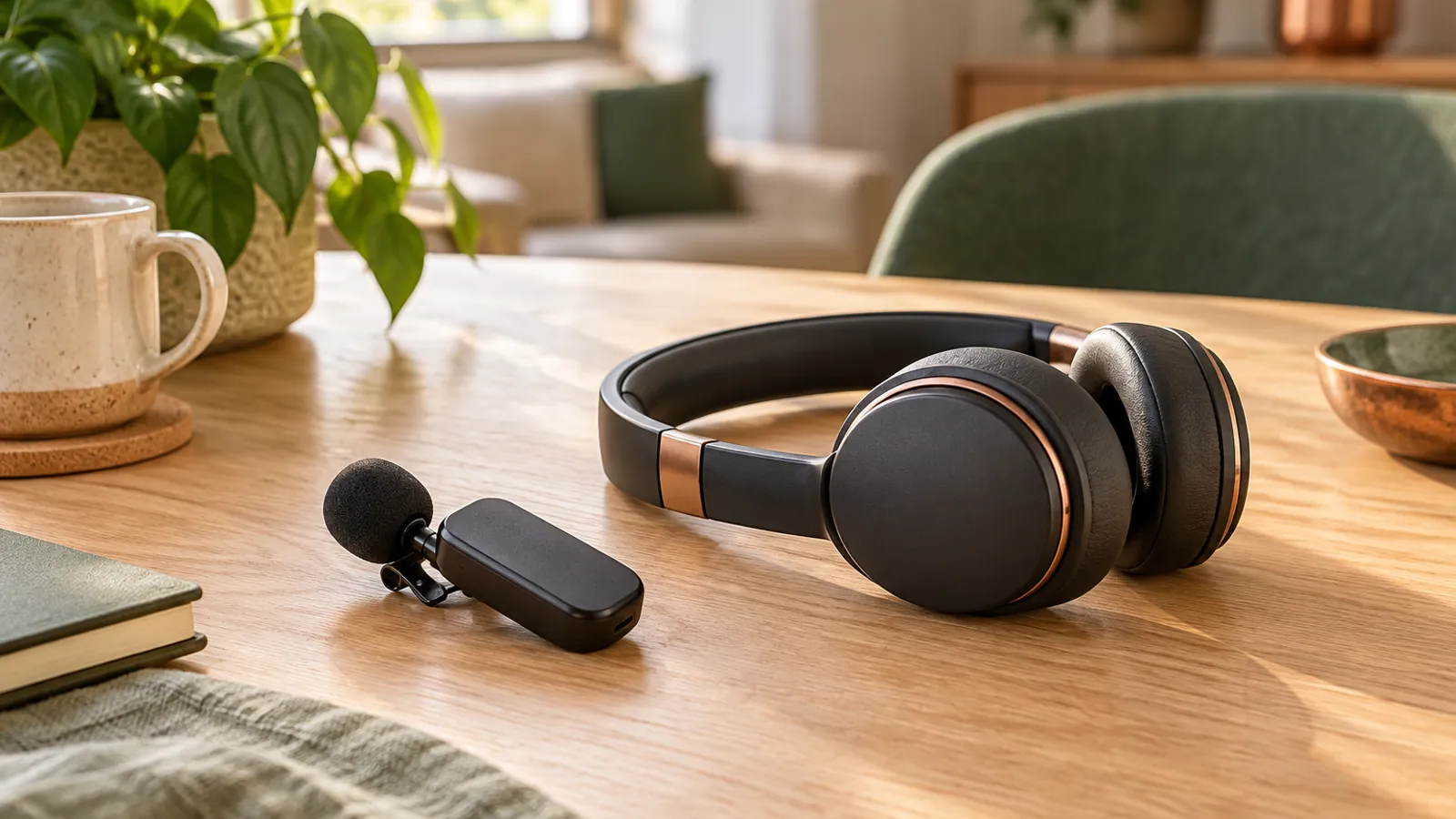
Compare assistive listening devices by the specific situation they address, their compatibility, and the complete setup required. A remote microphone, television listening system, hearing loop receiver, or alerting device may solve a focused problem, but it should not automatically be treated as a replacement for appropriate hearing care. Start with the task you want to accomplish, then ask a qualified professional or the responsible venue about suitable equipment.
Define the listening situation
Write down where the difficulty occurs, what sound or speaker you need to access, and what equipment you already use. A conversation across a room, television audio, and a doorbell alert are different tasks. NIDCD describes assistive listening and alerting technologies as tools with different purposes, not one interchangeable product class.
If you use hearing aids, identify the exact model and any supported connection method. If you do not, ask whether the proposed system includes an appropriate receiver or headset. Do not buy a transmitter alone and assume it will work with every device. The complete signal path matters: source, transmitter or connection, receiver, and the way you hear or perceive the output.
Compare categories by function
Use this table as a starting map, not a product recommendation. A specific model may have different requirements, and a venue may provide equipment you do not need to purchase personally. Ask before adding a new device to the budget.
| Category | Focused use | What to check |
|---|---|---|
| Remote microphone | Bringing a speaker's voice to a compatible receiver | Exact receiver compatibility and handling |
| TV listening system | Delivering television audio to a listener | TV outputs, receiver, and household use |
| Hearing loop | Accessing sound through a compatible loop system | Venue system and telecoil or receiver |
| Personal amplifier | Amplifying a selected sound situation | Intended use and suitable output method |
| Alerting system | Signaling events with light, vibration, or sound | Which event is detected and where alerts reach |
An alerting device and a speech-listening device answer different needs. Do not use the existence of one as proof that the other is unnecessary.
Check compatibility before price
Ask the seller to identify every component required for your actual setup. For television, describe the television and available audio connections. For a hearing loop, ask the venue what system is installed and whether receivers are available. For a remote microphone, check the exact hearing aid or receiver model rather than relying on a general wireless claim.
If professional setup or instruction is needed, ask whether it is available and included. Try the ordinary sequence: turn the system on, connect it, adjust it appropriately, and return to normal use. A system that works only when someone else is present may require a support plan you have not budgeted for. Discuss accessibility and handling as part of the comparison.
Price the complete system
Include the transmitter, receiver, compatible accessory, setup, power equipment, shipping, and any recurring service where applicable. Do not assume the headline price includes everything pictured. Ask whether a required component is supplied by a venue or already included with your hearing aid arrangement.
In an illustrative example, a $180 transmitter plus a $90 receiver and a $30 connection accessory totals $300. These are fictional amounts, not actual prices. A second fictional $280 package may be cheaper upfront if it includes all three components, but only if it works for the same task and equipment. A lower total for an incompatible system is not a useful saving.
Use the ownership budget only after identifying the full upfront arrangement and any real ongoing expenses. If the device is used only in one setting, do not assign it an invented ability to replace care in every other setting.
Keep medical needs and safety separate
Assistive technology can complement hearing care, but a purchase comparison cannot explain an underlying hearing change. Seek prompt medical attention for sudden hearing loss and discuss other warning signs with a clinician. Do not use a personal amplifier as a self-prescribed treatment merely because it is easier to buy.
For alerting systems connected to safety-related events, check the intended function and the responsible manufacturer's instructions. This guide does not certify a product for life-safety use or establish compliance with building or accessibility requirements. For a workplace, school, or public venue, ask the responsible organization about its appropriate equipment and procedures. Personal shopping advice should not substitute for a site-specific safety or accessibility assessment.
FAQ
Do I need hearing aids to use every assistive listening system?
Not necessarily. Some arrangements use a separate receiver or headset, while others connect to compatible hearing aids. Ask about the exact system and required components. The category name alone does not establish how you will receive the sound.
Is a hearing loop the same as any wireless connection?
No. A loop uses a particular transmission and receiving arrangement described by NIDCD. Verify the venue system and whether your device has a suitable telecoil or whether a receiver is provided. Do not infer compatibility from a generic wireless label.
Should I buy an accessory before a hearing evaluation?
If you have unexplained hearing difficulty or are unsure what is appropriate, seek professional advice. You can research a specific listening task, but an accessory purchase should not delay medical attention for sudden changes or replace an individualized care discussion.
Continue your comparison
- Hearing aid buyer safeguards: a document-first approach
- Sudden hearing changes: when shopping should wait for medical care
- Hearing aid returns and refunds: keep a clear paper trail
Use the pathway comparison alongside the written terms for your own purchase.
Sources
- NIDCD assistive devices — official guidance relevant to this guide.
- NIDCD hearing aids — official guidance relevant to this guide.
- FDA purchasing guidance — official guidance relevant to this guide.
Source check: October 30, 2026. This was an editorial source check with AI assistance, not a clinical review. Confirm current product terms and your individual benefits before acting.