Read hearing aid marketing claims without turning them into evidence
Separate intended use, feature descriptions, testimonials, regulatory language, and personal outcomes when evaluating hearing aid advertising.
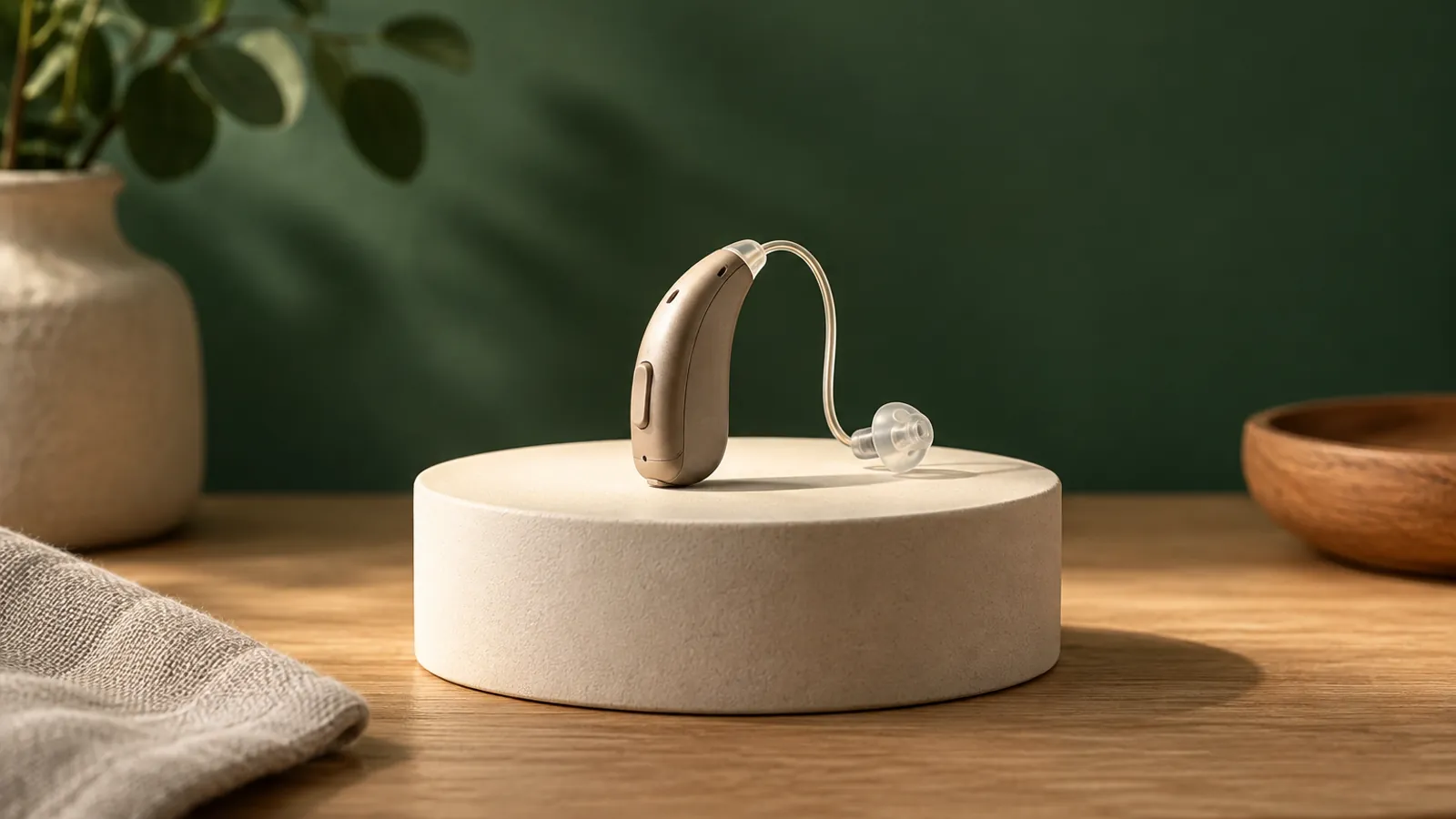
Treat hearing aid advertising as a starting point for questions, not proof that a device is suitable or that its price represents good value. Identify the exact claim, ask what evidence supports it, and check whether it applies to the model and situation you are considering. A testimonial, a feature name, and a regulatory statement answer different questions. None should be silently converted into a guarantee of your personal outcome.
Identify the product category first
Read the intended-use information. A hearing aid, a personal sound amplification product, and a listening accessory are different categories. Words such as “hearing enhancement” or “clear sound” do not establish equivalence. Ask the seller to identify what the product is and provide the manufacturer's instructions for the exact model.
For OTC hearing aids, the FDA category is intended for adults 18 and older with perceived mild to moderate hearing loss. The existence of that category does not mean a product is right for every adult or every degree of hearing difficulty. If you are uncertain about your needs, discuss them with a qualified professional rather than interpreting an advertisement as a diagnosis.
Separate features from outcomes
A product may have a particular control, connection, or processing function. Whether that function helps you in a specific setting is another question. Ask what the feature does, whether extra equipment is needed, and how you can evaluate it during any return period. A longer feature list should not automatically receive a higher score in your personal comparison.
| Advertising statement | Better follow-up question |
|---|---|
| Wireless connectivity | Which function works with my exact phone? |
| Professional support | Who provides it, how, and for how long? |
| Comfortable design | Can I try insertion and everyday use? |
| Included care | Which services and exclusions are written down? |
| Trial available | What deadline, deductions, and return steps apply? |
| Savings claim | Compared with which complete, current arrangement? |
Keep the answer specific. A demonstration in a quiet setting does not establish performance in every environment.
Read regulatory language precisely
Ask what a regulatory statement actually means and verify it through the relevant official source. Do not treat a company registration, device listing, clearance statement, or broad use of FDA terminology as interchangeable claims. This guide does not assign a regulatory status to any named product and does not maintain a product database.
Use the manufacturer's exact product identity when checking a claim. If the seller supplies only a general statement about the company, ask how it relates to the device being sold. Even a verified regulatory fact is not a personal recommendation or a price comparison. It should be recorded in its own category rather than used to imply guaranteed clinical benefit.
Check price claims with comparable totals
Ask whether an advertised amount is per device or per pair, whether it includes care, and whether a required accessory is excluded. A percentage saving is meaningful only when the reference purchase is identified and genuinely comparable. Do not compare a device-only headline with a different package and call the difference a verified saving.
For arithmetic illustration only, a $900 device arrangement plus a required $150 accessory totals $1,050. Comparing it with a fictional $1,100 arrangement that includes the accessory gives a $50 upfront difference, not $200. The figures are not actual offers. Neither total establishes suitability, service quality, or future expenses. Use complete written quotes before drawing a financial conclusion.
Treat testimonials and urgency carefully
A review describes someone's reported experience, under conditions you may not know. It does not establish your hearing needs or guarantee the same result. Ask whether a reviewer received payment or another benefit if that information is relevant and available. This site does not invent patient stories, expert quotes, star ratings, or claims of hands-on product testing.
If a sale deadline pressures you to decide before reading the terms, ask for time or an extension. The deadline does not answer the missing questions. Keep a copy of claims that materially influenced your purchase and the documents supplied by the seller. For unresolved concerns about misleading advertising, use the appropriate consumer protection channels rather than repeating the claim as an established fact.
FAQ
Does this site recommend a best hearing aid brand?
No. The comparison focuses on pathways, costs, services, and questions you can verify. It does not contain a clinical product trial or a current provider price survey. A brand ranking without evidence would not help you make a reliable personal decision.
Can a genuine feature still be unhelpful to me?
Yes. A function can exist without solving your particular listening or handling problem. Identify the goal, check compatibility, and discuss suitability with a professional. A return-period evaluation can help you understand practical use within the actual policy.
What should I do if evidence is missing?
Mark the claim unverified and keep it out of your factual comparison. Ask for a primary source or an exact demonstration. If the claim is essential to your decision and remains unsupported, the uncertainty should be visible before you pay.
Continue your comparison
- Hearing aid buyer safeguards: a document-first approach
- Sudden hearing changes: when shopping should wait for medical care
- Hearing aid returns and refunds: keep a clear paper trail
Use the pathway comparison alongside the written terms for your own purchase.
Sources
- FDA hearing aid information — official guidance relevant to this guide.
- FDA OTC guidance — official guidance relevant to this guide.
- NIDCD hearing aid selection — official guidance relevant to this guide.
Source check: October 30, 2026. This was an editorial source check with AI assistance, not a clinical review. Confirm current product terms and your individual benefits before acting.